Modulare Fixed Casework
Precision-Built, Adaptable, and Made for Modern Laboratories
Engineered for Strength and Longevity
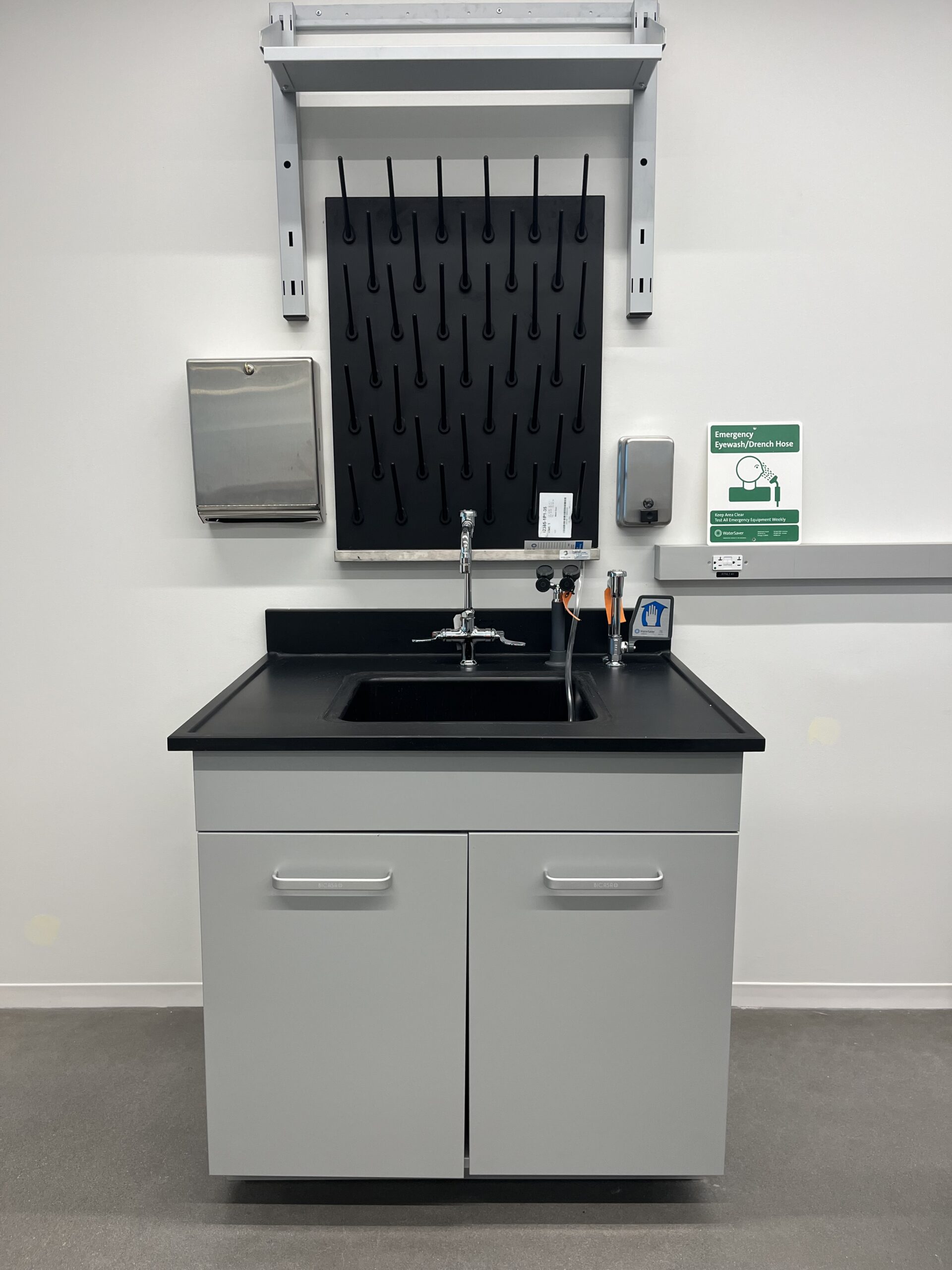
Modulare fixed casework is built to withstand the demands of high-use laboratory environments. Every cabinet is constructed from:
- Powder-coated steel for exceptional durability and chemical resistance
- Precision-formed panels that maintain alignment and rigidity
- High-performance hardware designed for smooth, reliable operation
This ensures a long service life with minimal maintenance — a critical factor for research, clinical, and production facilities.
Modular by Design
Although Modulare is a fixed casework system, it is engineered with modularity at its core:
- Interchangeable door and drawer fronts
- Standardized widths and heights for easy reconfiguration
- Integrated service zones that support future utility changes
- Compatibility with our Flex benching and tall storage systems
This modularity allows planners to design with confidence, knowing the system can adapt as programs grow or equipment needs shift.
Clean, Modern Aesthetic
Modulare blends Italian design principles with U.S. manufacturing precision:
- Clean lines and flush fronts
- A wide range of colors and finishes
- Integrated pulls for a sleek, modern look
The result is a casework system that elevates the visual quality of any laboratory environment.
Built in North Carolina. Designed for the U.S. Market.
All Modulare casework is manufactured in Charlotte, NC, ensuring:
- Shorter lead times
- Consistent quality control
- Full compliance with U.S. codes and standards
For further details please contact [email protected]
Contact our Sales Team
A member of our team can provide you with bespoke specification and pricing depending on your project requirements.
FAQs
Every question you might have about furniture and casework - answered!
Laboratory furniture includes a wide range of specialized workstations and storage solutions, such as: · Benches & casework – Fixed or modular workstations for research. · Fume hoods – Ventilated enclosures for handling hazardous substances. · Cabinets & shelving – Storage solutions for chemicals and equipment. · Mobile workstations – Adjustable and movable lab tables/benches · VSM – Vertical Service Modules for greater adaptability in the lab space
Consider the following when selecting casework for your lab: · Material durability – Choose chemical-resistant surfaces. · Storage needs – Ensure ample space for equipment and supplies. · Modularity – Opt for adjustable configurations for flexibility. · Compliance – Verify SEFA, UL, ANSI/ASHRAE, and ISO certifications.
· Fixed furniture is permanently installed and ideal for long-term stability. · Modular furniture is adjustable and movable, allowing labs to reconfigure layouts as needed.
Standard lab benches are typically 30–36 inches high, while cabinets vary based on storage needs and workspace dimensions.
· Epoxy resin – Best for high heat loads, excellent for chemical resistant. · Lab Grade Phenolic resin – Best for chemical resistant, Lightweight and moisture-resistant. · Stainless steel – Ideal for sterile environments. · High-pressure laminate – Cost-effective for general lab use.
Labs can customize furniture by: · Selecting specialized materials for chemical resistance. · Adding adjustable shelving for flexible storage. · Choosing modular designs for adaptability.
Mobile workstations offer: · Flexibility – Easily repositioned to accommodate robotics, larger equipment, different disciplines. · Adaptability – Easy to adapt for different disciplines and as science evolves · Space optimization – Ideal for small or shared labs. · Ergonomic benefits – Adjustable heights for user comfort.
Laboratory furniture must comply with: · SEFA (Scientific Equipment and Furniture Association) standards. · UL (Underwriters Laboratories) safety certifications. · ANSI/ASHRAE ventilation and airflow guidelines. · ISO (International Organization for Standardization) requirements.
Look for manufacturer documentation and request certification details before purchasing.
· Adjustable workstations to accommodate different users. · Proper chair height for comfortable posture. · Adequate lighting to reduce eye strain.
· Use appropriate cleaning solutions for each material. · Avoid abrasive cleaners that may damage coatings. · Regularly inspect surfaces for signs of wear or corrosion.
· Recycled aluminum – Lightweight and highly recyclable. · Post-consumer recycled steel – Durable and low-emission. · Low-VOC laminates – Reduce chemical emissions in labs.
· Reduces waste by using recycled materials. · Lowers carbon footprint through energy-efficient production. · Extends product lifespan, minimizing replacement needs.
· Environment Product Declarations (EPD) · ISO 14001 environmental management certification. · ECOVardis reporting
· Material durability – Choose chemical-resistant surfaces. · Compliance – Ensure certifications meet industry standards. · Modularity – Opt for adjustable configurations. · Sustainability – Select eco-friendly materials.
Look for trusted manufacturers with certifications, sustainability commitments, and industry expertise, such as BICASA North America.
Still have questions?
Get in touch with our friendly sales team.