RX Smart Fume Hood by BICASA North America
High-performance protection. Smart design. Seamless integration.
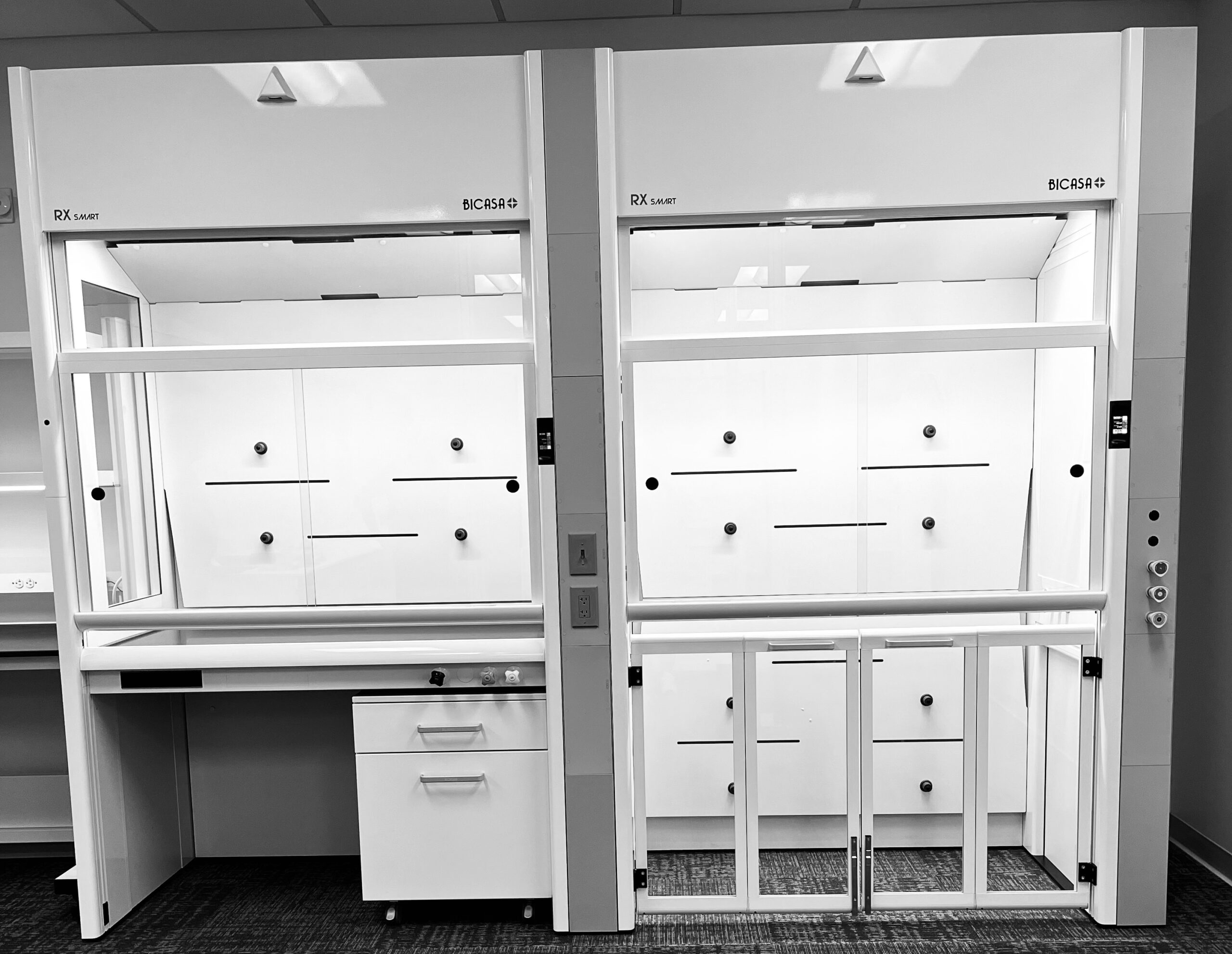
The RX Smart Fume Hood is BICASA North America’s flagship containment solution - engineered for safety, speed, and adaptability. Designed in Italy and proudly assembled in Charlotte, NC, RX Smart Fume Hoods meet the most rigorous global standards, including ASHRAE 110, SEFA 1, and EN 14175, and is fully UL listed for peace of mind.
Its modular construction enables fast, clean installation, reducing downtime and simplifying site coordination. Available in bench-mounted and floor-mounted configurations, RX Smart integrates seamlessly with BICASA’s MODULARE™ casework and adapts to a wide range of lab layouts and compliance needs.
Available in a range of sizes and ADA (or ADA combo) RX Smart Hoods can also be built to custom dimensions.
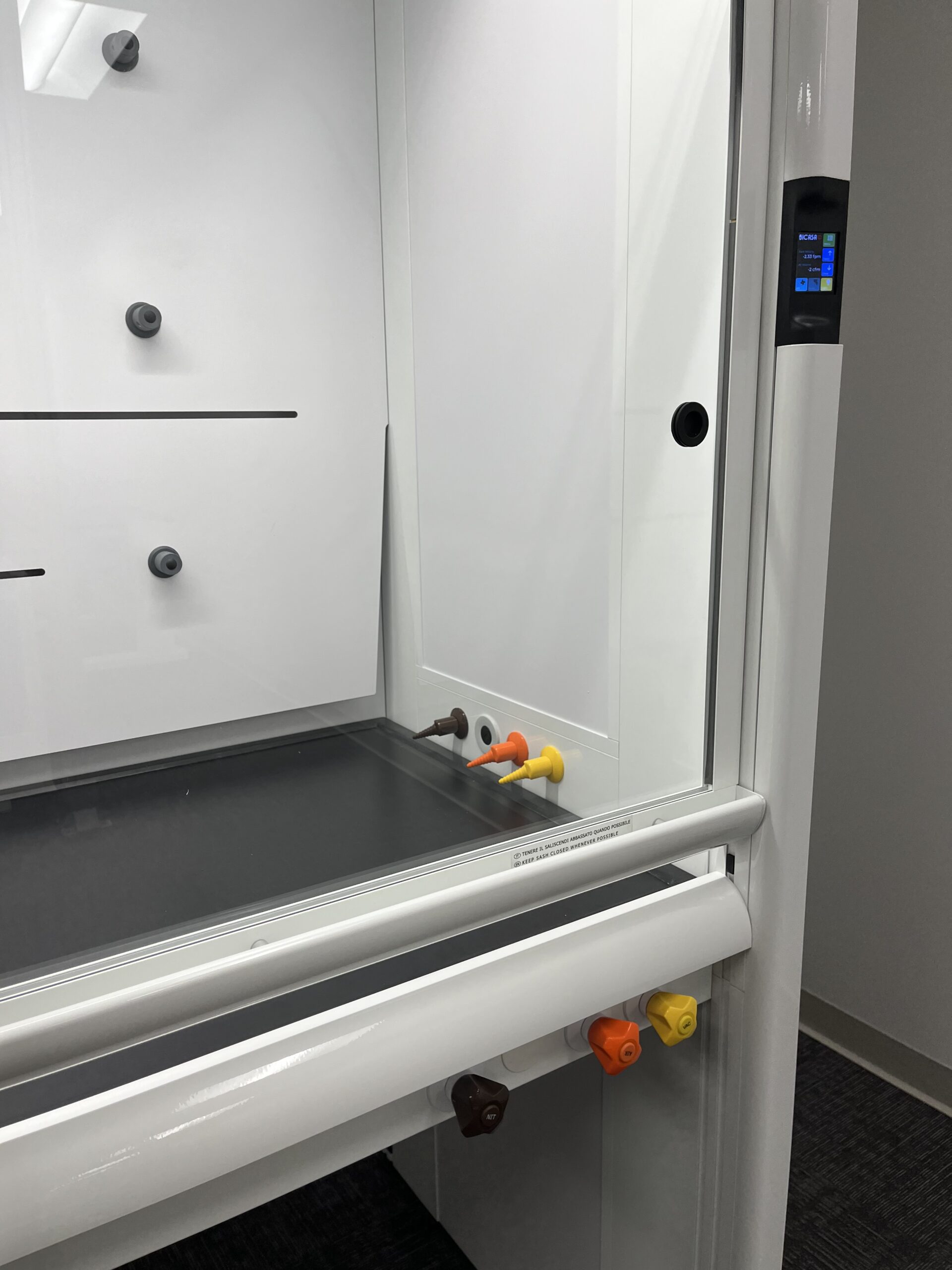
At its core is a next-generation control panel - featuring intuitive interface, real-time diagnostics, and smart connectivity with building management systems. Whether constant volume, VAV, or ADA-compliant, RX Smart delivers high containment, ergonomic operation, and future-ready performance.
Certified safe. Technically advanced. Rapidly deployable. RX Smart - where protection meets precision.
Contact our Sales Team
A member of our team can provide you with bespoke specification and pricing depending on your project requirements.
FAQs
Every question you might have about fume hoods - answered!
A fume hood is a ventilated enclosure designed to capture and remove hazardous fumes, vapors, and airborne contaminants from laboratory environments. It works by drawing air through the hood and exhausting it outside or filtering it before recirculating.
Fume hoods protect lab personnel from exposure to toxic chemicals, flammable substances, and airborne contaminants, ensuring a safe working environment.
· Fume hoods protect users from chemical fumes and vapors by ventilating air externally. · Biosafety cabinets protect users and samples from biological contaminants using HEPA filtration.
There are several types of fume hoods, including: · Ducted fume hoods – Vent air outside the building. · Ductless fume hoods – Use carbon or HEPA filters to clean air before recirculating. · Perchloric acid fume hoods – Designed for corrosive chemicals, with specialized ducting. · Radioisotope fume hoods – Used for handling radioactive materials.
· Ducted fume hoods provide continuous ventilation and are ideal for all chemical applications. · Ductless fume hoods use filters to remove contaminants and are more energy-efficient but require regular filter replacement. They are ideal for low-risk chemical applications.
Perchloric acid fume hoods are specifically designed for handling perchloric acid, which can cause corrosion and explosive residues in standard duct systems.
Radioisotope fume hoods are used in radiological research to safely handle radioactive materials, featuring lead shielding and specialized airflow systems.
Fume hoods create negative pressure, pulling contaminated air away from the user and preventing exposure to harmful fumes.
Fume hoods must comply with: · OSHA (Occupational Safety and Health Administration) regulations for worker safety. · ANSI/ASHRAE 110 standards for containment and airflow performance.
Fume hoods should be tested annually to ensure proper airflow, containment, and filter efficiency. But also inspected on a regular basis as part of your lab maintenance and PM program.
· Keep the sash closed or at the recommended height. · Avoid blocking airflow with equipment. · Work at least 6 inches inside the hood. · Ensure proper ventilation before handling chemicals. · Ensure proper conditions to balance air ventilation in the room (HVAC)
Check for: · Consistent airflow (using an airflow monitor). · No unusual odors or chemical buildup. · Proper sash positioning.
The ideal face velocity shall comply with risk assessment to ensure effective containment: type of chemical products and quantity of hazardous fumes produced during activities are information to be considered to protect personnel from exposure to toxic substances. The most widely accepted range of average face velocities is 80 FPM to 100 FPM.
· Regularly wipe down surfaces to remove chemical residues. · Inspect airflow monitors for proper function. · Replace filters in ductless hoods as needed. · Follow your lab maintenance procedures
· Stop work immediately. · Check airflow monitors for issues. · Contact lab safety personnel for inspection. · Follow your lab safety procedures
Fume hoods should be installed away from doors, windows, and high-traffic areas to prevent airflow disruptions.
- Type of chemicals used.
- Ducted vs. ductless system.
- Size and airflow requirements.
- Compliance with safety standards.
If working with highly flammable or reactive chemicals, an explosion-proof fume hood may be required.
Still have questions?
Get in touch with our friendly sales team.