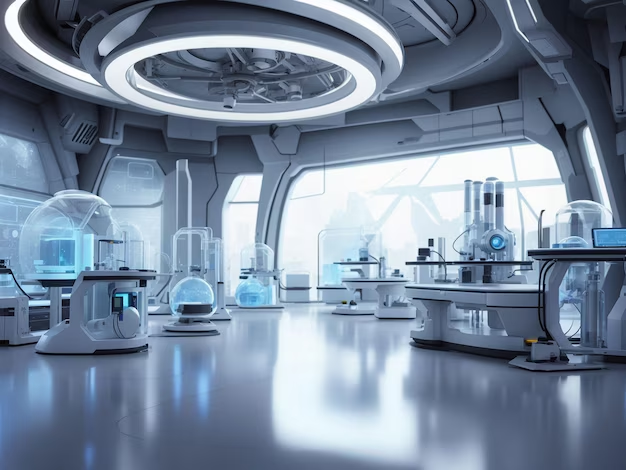


Human-centered lab design improves safety, ergonomics, flexibility, and research outcomes. Learn how to future‑proof laboratories with modular systems and adaptive planning.
Laboratories are often described in terms of equipment, utilities, and square footage – but the most important element is the people who use them. Human-centered lab design focuses on creating environments that support safety, efficiency, ergonomics, adaptability, and well-being. As research programs evolve and space demands shift, designing for people becomes the most effective way to future‑proof a laboratory.
This article builds on themes from our earlier pieces, including How to Future‑Proof Your Lab, Flexibility vs. Adaptability in Laboratory Design, and Safety in the Age of AI and Robotics. Together, these ideas form a holistic approach to designing labs that can evolve as quickly as science itself.
It’s important to recognize that many experienced lab planners and architects already incorporate human‑centered principles into their work. The best in the field have been designing for safety, clarity, ergonomics, and adaptability for decades – long before these ideas became widely discussed. Human‑centered design is not a new direction for them, but a shared language that helps articulate what they have always prioritized: creating research environments that support people first. Our goal is to complement and support that expertise, not redefine it.
Designing for Safety and Clarity
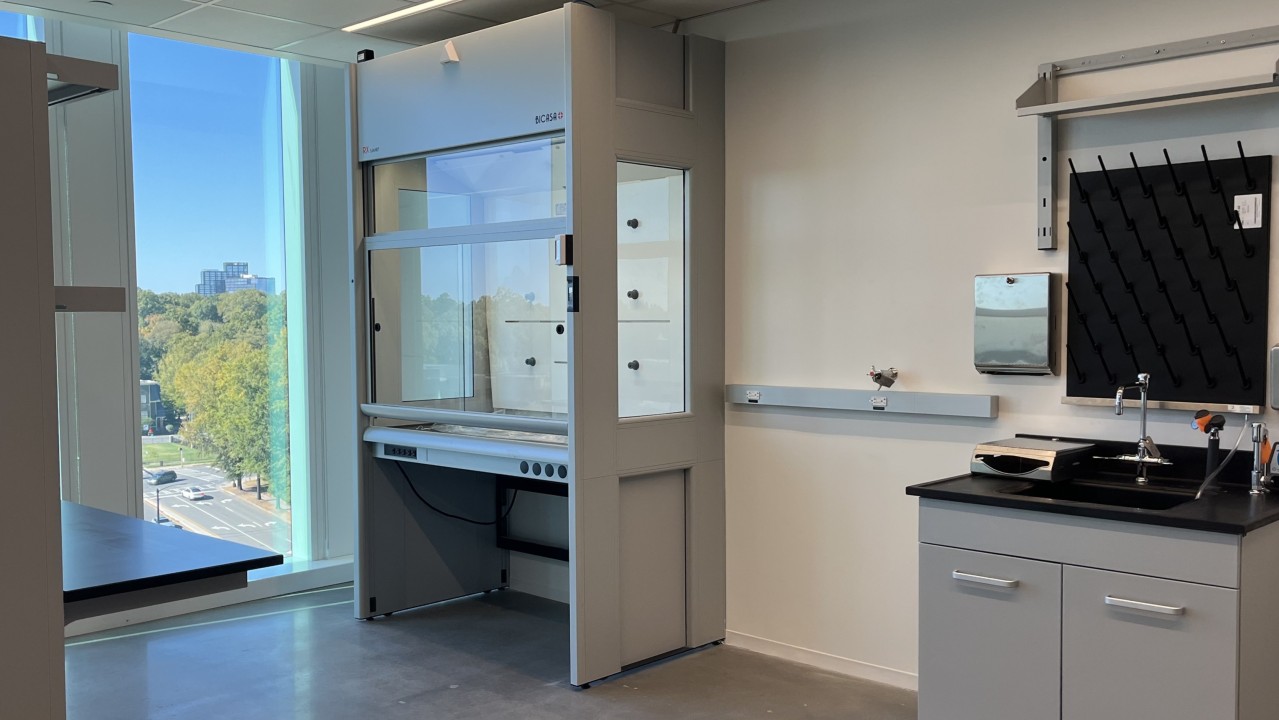
Safety is the foundation of every successful laboratory, and human-centered design strengthens it by making the environment intuitive and predictable. Clear sightlines across benches and fume hoods help researchers remain aware of their surroundings, reducing the likelihood of accidents. When utilities are placed thoughtfully — not as an afterthought — clutter decreases, workflows improve, and hazards become easier to identify.
Safety is not simply a checklist; it is a design philosophy. Decisions about bench height, fume hood visibility, circulation paths, and emergency equipment placement all contribute to a safer, more navigable space. When researchers can see clearly, move freely, and access tools without strain, the entire environment becomes more resilient.
Supporting Adaptability in a Rapidly Evolving Scientific Landscape
Science is advancing at a pace that would have been unimaginable a decade ago. AI-driven discovery, automation, robotics, high-throughput screening, and interdisciplinary research models are reshaping how labs operate. Equipment footprints change, workflows shift, and research priorities evolve — sometimes within a single grant cycle.
Traditional fixed casework cannot keep up with this level of change.
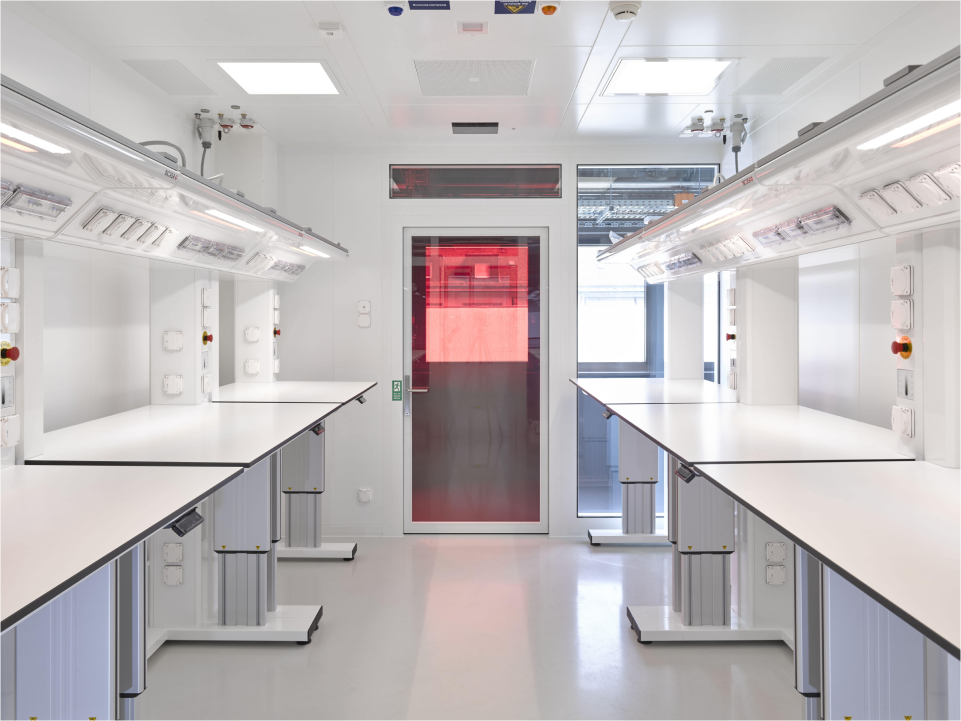
Human-centered design embraces continuous adaptability. Modular laboratory systems, flexible benching, and reconfigurable utility distribution allow spaces to evolve without major renovation. This adaptability supports new equipment integration, shifts between wet and dry research, temporary project teams, and rapid deployment of new methodologies.
A future-proof lab is not one that predicts the future — it is one that can accommodate whatever the future brings.
Reducing Cognitive Load Through Intuitive Design
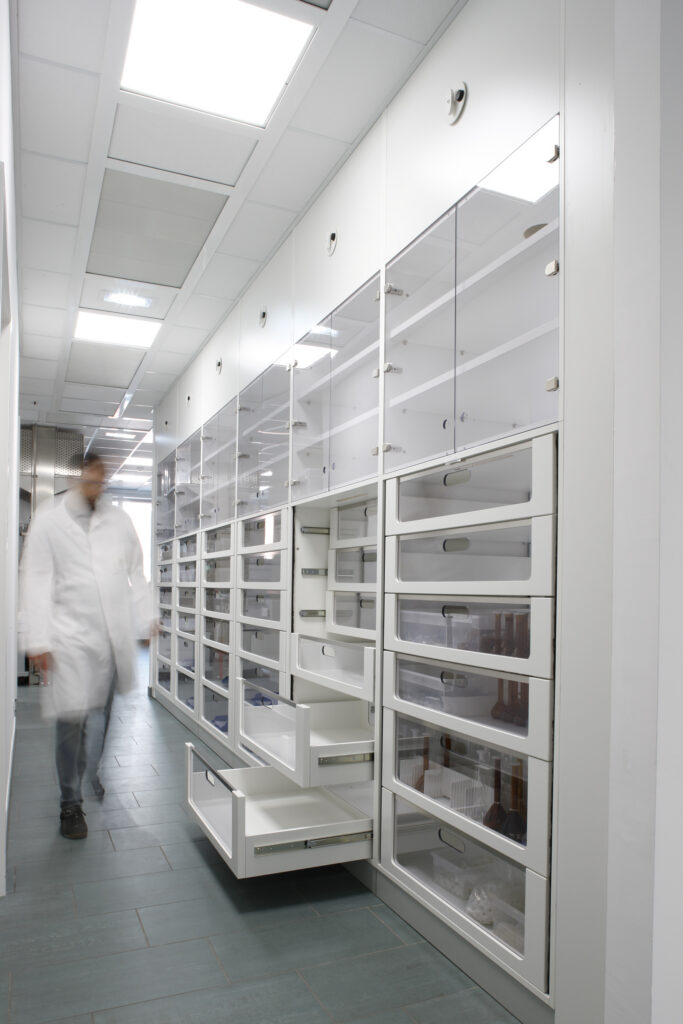
A well-designed laboratory reduces cognitive load by making the environment easy to understand and navigate. When storage is consistent, utilities are predictable, and equipment zones are clearly defined, researchers spend less time searching and more time focusing on their work.
This is especially important in high-intensity environments where precision matters. Reducing mental fatigue improves accuracy, decreases errors, and supports better research outcomes. It also benefits neurodiverse researchers, who often thrive in environments with clear organization and predictable spatial logic.
Human-centered design recognizes that mental clarity is as important as physical safety.
Enhancing Collaboration Through Purposeful Space Planning
Modern research is inherently collaborative. Teams share equipment, exchange ideas, and work across disciplines. Human-centered labs support this by creating zones that encourage interaction without compromising focus or safety.
Collaboration does not mean open space for its own sake. It means designing environments where people can gather naturally, share resources efficiently, and move between individual and group work with ease. Flexible layouts allow teams to reconfigure spaces for equipment-intensive tasks, quiet analysis, or cross-functional meetings.
When collaboration is supported by design, innovation accelerates.
Prioritizing Researcher Well-Being
Lighting, acoustics, temperature control, and ergonomics all influence researcher well-being. Human-centered design considers these factors holistically, creating environments that reduce fatigue and support comfort during long hours of focused work.

Ergonomics: A Critical Layer of Human-Centered Design
Ergonomics is one of the most overlooked aspects of laboratory planning, yet it has a direct impact on safety, productivity, and long-term health.
Adjustable-height benches allow researchers to alternate between seated and standing work, reducing strain. Electronic height-adjustable systems are essential for heavy or high-risk equipment, enabling safe loading and unloading without awkward lifting.
This is especially important for rotating equipment such as centrifuges, which can ramp up to 3,000 rpm or more. These units should always be placed on electronically height-adjustable benches so researchers can safely remove rotors and buckets at an appropriate working height. Without this, lifting heavy, awkward components becomes difficult and increases the risk of strain or accidental drops.
Thoughtful ergonomic planning ensures that researchers can work safely, comfortably, and efficiently — even when handling equipment that demands precision and physical control.
The Role of Modular Systems in Human-Centered Design
Modular systems – including flexible benching, reconfigurable casework, and adaptable utility distribution – play a critical role in maintaining safety as research evolves. As we explored in earlier articles on future‑proofing laboratories and the distinction between flexibility and adaptability, modularity is not simply a design preference; it is a foundational safety strategy in environments where equipment, workflows, and research priorities shift rapidly.
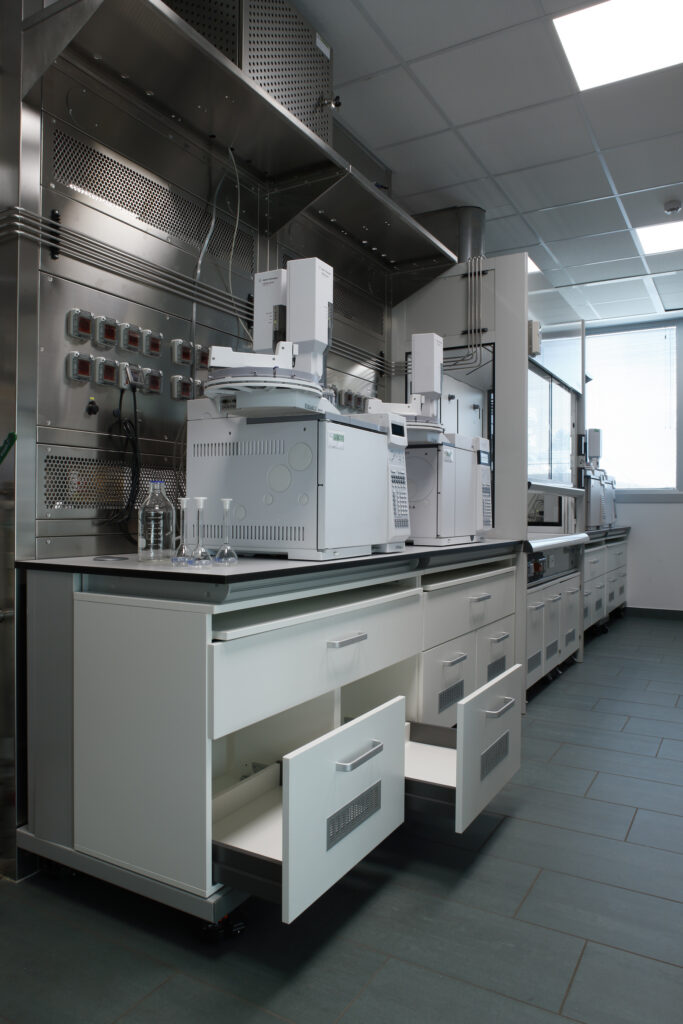
A modular laboratory allows equipment to be repositioned without construction, which reduces disruption and eliminates the unsafe “workarounds” that often emerge when spaces cannot adapt quickly enough. Predictable utility placement ensures that containment, clearances, and airflow remain consistent even as the layout changes. When new equipment arrives, whether a robotic liquid handler, a high‑throughput analyzer, or a large centrifuge, the space can be reconfigured safely and efficiently, without compromising workflow or compliance.
Modularity also minimizes downtime during transitions, allowing research teams to pivot without interrupting critical work. In a world where scientific programs evolve quickly and equipment footprints change frequently, modularity becomes a stabilizing force. It preserves safe, stable, and compliant environments over time, even as the science within them accelerates.
Modularity is not just a design choice — it is a strategic investment in resilience.
Designing for the Future
Future-proof laboratories are built around people — their workflows, their safety, and their evolving needs. As science accelerates, the most resilient labs will be those designed to adapt at the speed of discovery.
Human-centered design ensures that laboratories remain flexible, safe, and aligned with the rapid evolution of research. By prioritizing people, institutions create spaces that support innovation, reduce long-term costs, and remain ready for whatever comes next.
FAQ: Human-Centered Laboratory Design
What is human-centered lab design?
Human-centered lab design prioritizes the needs, safety, comfort, and workflows of the people who use the laboratory. It integrates ergonomics, visibility, adaptability, and intuitive layouts to improve research outcomes and reduce risk.
Why is flexibility important in laboratory design?
Scientific research evolves rapidly. Flexible and modular lab systems allow spaces to adapt to new equipment, workflows, and methodologies without major renovation, reducing downtime and long-term costs.
How does ergonomics improve laboratory safety?
Ergonomics reduces strain, repetitive motion injuries, and unsafe lifting. Adjustable-height benches and electronic lift systems help researchers work safely with heavy or high-speed equipment such as centrifuges.
What makes a lab future-proof?
A future-proof lab is designed for continuous change. Modular systems, adaptable utilities, and human-centered planning allow the space to evolve as research needs shift.
How do modular lab systems support research?
Modular systems enable rapid reconfiguration, support interdisciplinary work, and allow labs to integrate new equipment quickly. They extend the lifespan of the space and improve operational efficiency.
Why is visibility important in lab design?
Clear sightlines improve safety by helping researchers stay aware of hazards, colleagues, and equipment activity. Visibility also supports collaboration and supervision.