

Laboratories are evolving faster than traditional buildings can support. AI, robotics, shifting wet/dry lab ratios, rising fume hood demand, and sustainability expectations are reshaping how labs must be designed. This article explains why adaptability, not flexibility, is now the defining strategy for future‑ready laboratories, and how infrastructure, ventilation, furniture systems, and MEP design must evolve to protect capital investment.
Laboratories across education, research, pharma, biotech, GMP manufacturing, QC, clinical diagnostics, and government science are facing a shared challenge: science is evolving faster than buildings can keep up. AI‑driven discovery, robotics, automation, sustainability mandates, and safety expectations are reshaping what a modern lab must be capable of.
At the same time, institutions are navigating shifting ratios of wet lab to dry lab space, rising demand for chemical fume hoods, and the need to support both computational and experimental science under one roof.
In this environment, future‑proofing is no longer a design preference – it is a capital‑protection strategy. The question is not “How flexible is the lab?” but rather “How adaptable is the infrastructure that supports it?”
This distinction determines whether a laboratory remains relevant for decades or becomes obsolete within a single research cycle. Nowhere is this more evident than in the shifting balance between wet and dry labs as AI and robotics reshape scientific workflows.

AI, Robotics, and the Changing Balance of Wet and Dry Labs
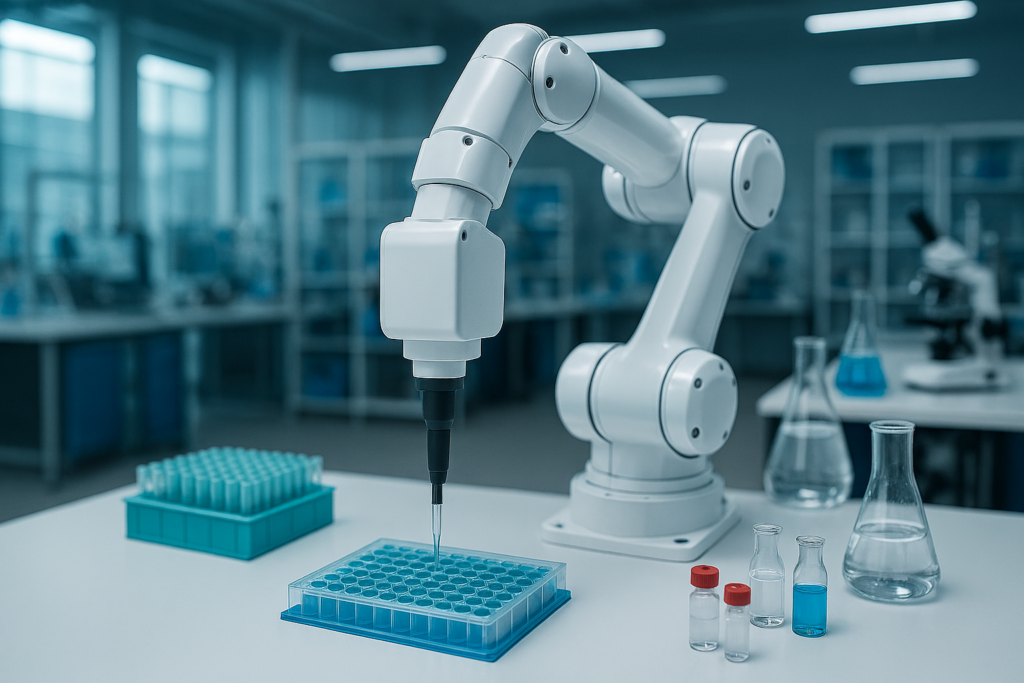
AI and automation are transforming laboratory operations across every sector. Robotics are accelerating workflows in GMP and QC environments. Automated sample preparation is becoming standard in clinical labs. High‑throughput screening is redefining pharmaceutical research. Academia is expanding data‑intensive computational programs, while government and industry are adopting digital twins and predictive modeling to guide decision‑making.
As computational science grows, many institutions are increasing their dry lab footprints. Yet at the same time, demand for wet lab space and especially for chemical fume hoods, is rising sharply. The result is a dual expansion: more dry labs to support data‑driven science, and more wet labs to support the chemistry, biology, and materials work that AI and robotics now accelerate rather than replace.
The data is clear: fume hood demand is growing globally.
Multiple independent market analyses show:
- The global fume hood market is projected to grow from $0.68B in 2026 to $0.91B by 2035 (3.2% CAGR).
- Another analysis shows growth from $2.5B in 2025 to $4B by 2033 (6% CAGR).
- A third report projects growth from $1.5B in 2024 to $3.2B by 2034 (8.1% CAGR).
- Chemical fume hoods specifically are projected to grow from $1.5B in 2024 to $2.8B by 2033 (7.2% CAGR).
- Nearly 40% of existing fume hoods in the U.S. exceed 15 years of life, driving replacement demand.
- Over 65% of new laboratory construction projects now integrate advanced fume hood solutions at the design stage.
This is unusually strong growth for a mature safety‑infrastructure category—a clear indicator that wet lab demand is not shrinking; it is intensifying.
As Dawn Jacobs of BICASA North America notes, “The growth in both wet and dry lab demand is not contradictory; it’s a reflection of how diverse and fast‑moving science has become. Labs must now support chemistry, biology, automation, and computation under one roof.”
This dual growth creates a genuine design paradox. Buildings must simultaneously accommodate high‑density equipment, robotics and automation, chemical handling and containment, data‑heavy computational environments, and rapid shifts between research programs. A lab built for today’s workflow may be misaligned with tomorrow’s—unless its infrastructure is designed to adapt.
Flexibility vs. Adaptability – The Distinction That Protects Capital Investment
This design paradox leads directly to one of the most misunderstood concepts in laboratory planning: the difference between flexibility and adaptability. Although architects and experienced lab planners have long articulated this distinction, the broader industry still tends to use the terms interchangeably. That confusion often leads to costly assumptions about what a laboratory will actually be capable of as science evolves.
For a deeper exploration of this topic, see Flexibility vs. Adaptability in Laboratory Furniture: Designing for the Future of Research (https://bicasa-usa.com/flexibility-vs-adaptability-in-laboratory-furniture-designing-for-the-future-of-research/).
Flexibility refers to adjustments that occur within an existing system, changes that support day‑to‑day or program‑to‑program shifts without altering the underlying infrastructure. Moving benches, adjusting shelving, rolling equipment, or rearranging mobile elements all fall into this category.
Adaptability, by contrast, is the ability of the system itself to evolve as science changes. It enables new equipment classes, new workflows, and new research programs without demolition or major reinvestment. Reconfiguring utilities, adding or relocating fume hoods, supporting robotics, or changing workflows without construction are all examples of true adaptability.
Why the Difference Matters
As Dawn Jacobs explains:“For nearly two decades, ‘flexible lab design’ became a buzzword. Moveable benches, mobile carts, and modular shelving were all marketed as flexibility – but none of these change the infrastructure. Flexibility helps you rearrange a space. Adaptability protects your capital investment.”
Flexibility is movement. Adaptability is transformation.
- A flexible lab helps you rearrange.
- An adaptable lab helps you avoid renovation.
In a world where AI, robotics, and wet‑to‑dry lab shifts are accelerating, flexibility alone is no longer enough. For any organization with a fixed capital budget – whether a university, a hospital, a biotech startup, or a global manufacturer – adaptability is the only strategy that prevents premature obsolescence and protects long‑term investment.
The Growing Demand for Chemical Fume Hoods: Needed in Adaptability
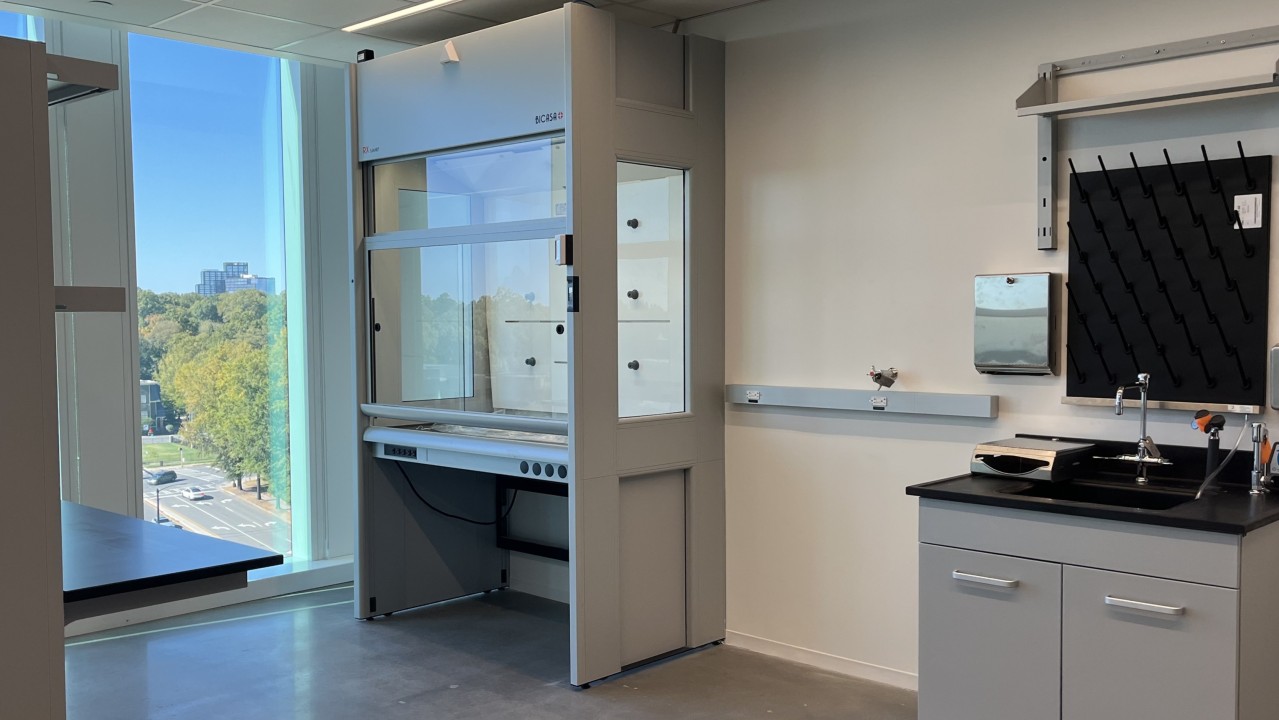
he growing demand for chemical fume hoods is one of the clearest indicators that wet lab activity is intensifying, not declining. Chemical fume hoods are among the most infrastructure‑dependent elements of a laboratory, and once installed, a ducted hood becomes a fixed part of the building. It is tied directly into the exhaust system, the room’s air change rate and ventilation strategy are calculated around its position, and the supply and exhaust airflow are balanced to maintain safe face velocity. Exhaust risers, ductwork, and fans are sized for specific hood counts and locations, and the hood’s safety performance depends on stable, predictable airflow and pressure relationships.
In short, a fume hood is only as effective as the ventilation system supporting it. This is why most facilities do not relocate hoods, the exhaust infrastructure is part of the building itself.
Where Fume Hoods Are Used Across Disciplines
Chemical fume hoods remain essential in chemistry‑driven environments, analytical labs, QC labs, and many interdisciplinary research spaces. They also play a role in specific workflows within biologics and cell‑based laboratories, such as chemical fixation, solvent handling, or radiolabeling, though they are not the primary containment device for sterile biological work. Their presence across such a wide range of disciplines underscores why demand continues to rise, even as computational science expands.
- Acid hoods for corrosive or perchloric acid processes
- Radioisotope hoods for radiolabeling and tracer work
- Walk‑in (floor‑mounted) hoods for large equipment or high‑volume processes
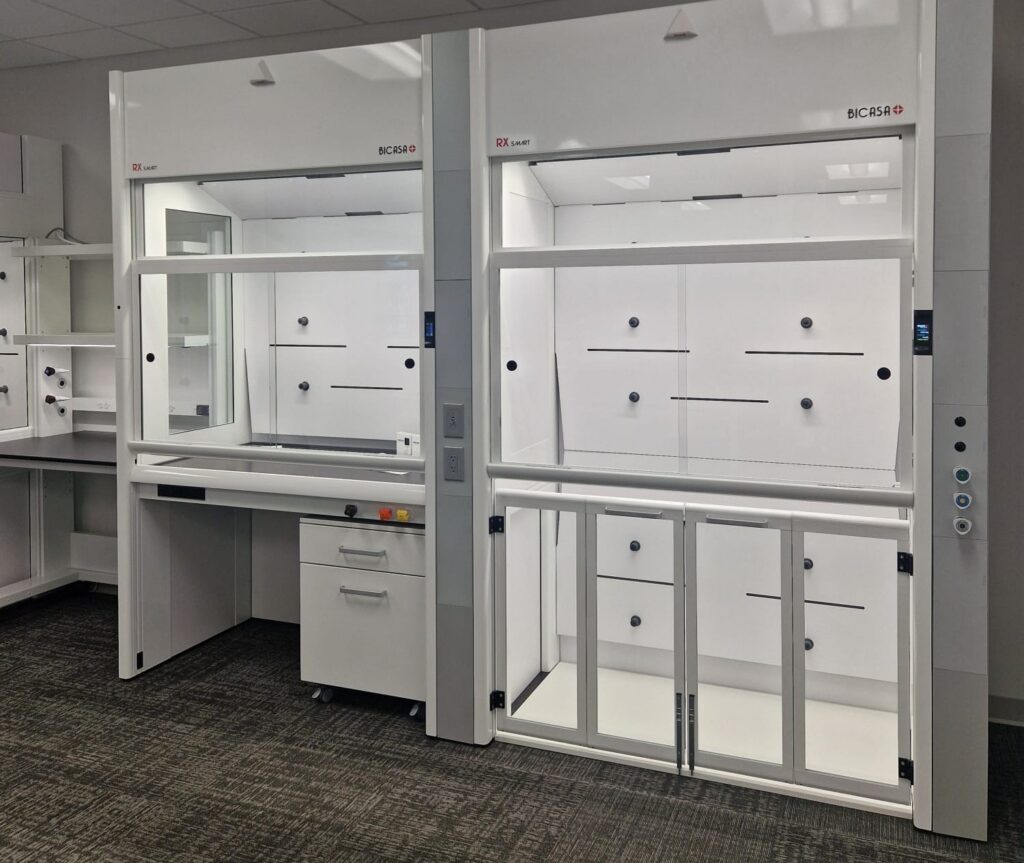
Each type of chemical fume hood has its own airflow, material, and safety requirements. These differences are precisely why adaptability must come from the hood’s internal architecture rather than from relocating the hood within the building. The duct connection, airflow balance, and exhaust infrastructure remain fixed, but the hood’s internal configuration, its work surface, utilities, base cabinets, and service integration, can be engineered to evolve as research needs change.
Biosafety Cabinets (BSCs) vs. Chemical Fume Hoods: A Clear Distinction
Because the terms are often used interchangeably outside the industry, it’s important to clarify the difference between these two critical pieces of laboratory equipment.
Chemical fume hoods are designed to protect the user from hazardous vapors, fumes, and chemicals. They exhaust air out of the building and are used for chemistry, solvent work, acids, radioisotopes, and any workflow involving hazardous vapors.
Biosafety cabinets (BSCs), by contrast, protect the product, the user, and the environment from biological agents. They rely on HEPA filtration rather than building exhaust (except for Class II Type B2) and maintain sterile airflow for cell culture and biologics. They are not designed for chemical vapors or solvent handling.
While BSCs are not truly “plug‑and‑play,” they are self‑contained, HEPA‑filtered devices that are far more relocatable than chemical fume hoods because they are not tied into the building’s exhaust risers. With proper planning and recertification, they can be moved as workflows evolve.
This distinction reinforces why chemical fume hoods remain fixed infrastructure, while BSCs offer greater mobility within the laboratory environment.
What Adaptability Really Means for Fume Hoods
Because the hood is anchored to the building’s ventilation system, true adaptability must come from the hood’s internal architecture, not from the expectation that it will be moved. (Although this is possible when planned).
This is where BICASA’s engineering is unique.
- BICASA hoods are designed so the chamber remains fixed, but everything around it can evolve:
- Worktops can be changed with ease, without disturbing the chamber or duct connection (or casework beneath)
- Disciplines can shift (chemistry, biology, teaching, sample prep, etc.)
- Cup sinks can be added or removed with ease
- Base configurations can be interchanged (acid cabinets, flammables, vacuum pump cabinets, storage, etc.)
- Utilities and remote valves can be repositioned, added/removed
- Under‑hood casework can be swapped because the bench top is part of the hood base, not the casework
- A floor‑mounted (walk‑in) hood can be reconfigured into a bench‑top hood using the same chamber
- The duct stub remains connected, preserving airflow integrity and safety
- In some regions, flexible duct connectors allow limited repositioning within a defined zone – but the ductwork itself remains part of the building
This is adaptability within the hood, not movement of the hood. And that distinction is essential for architects and planners who must design buildings that remain functional long after the first research program moves out.
Why This Matters to Architects and Planners
Architects, engineers, and lab planners understand that chemical fume hoods anchor the ventilation design. The capacity of the exhaust system determines what can be added in the future, and safety depends on stable, predictable extraction. They also know that meaningful reconfiguration is only possible when the hood itself is engineered for it, when its internal architecture can evolve without disturbing the duct connection or compromising containment.
BICASA’s approach supports future‑ready planning by enabling the hood to adapt to new workflows, equipment, and disciplines while the exhaust infrastructure remains untouched. This is precisely where experienced architects and lab planners excel: they recognize that fume hood adaptability is no longer a luxury but a core requirement of modern laboratory design.
How Architects and Lab Planners Think About Future‑Proofing
From there, their focus naturally widens beyond individual systems to the performance of the entire building. Experienced architects and lab planners are already designing for a future that is anything but predictable. They must account for unknown research programs, shifting wet‑to‑dry lab ratios, robotics integration, multi‑disciplinary workflows, tenant turnover, evolving safety and containment requirements, and the growing pressure to reduce embodied carbon. Their work is shaped by uncertainty, and they know that adaptability is the only reliable way to protect capital investment while meeting the demands of AI‑accelerated science.
But adaptability doesn’t happen through architecture alone. It requires manufacturers who understand the same pressures and design systems that can evolve as quickly as the science they support.
How Manufacturers Can Support These Dynamic Shifts
Laboratory Casework and equipment manufacturers play a critical role in future‑proofing laboratories. Companies like BICASA have spent decades studying how labs evolve and have engineered systems that support rapid reconfiguration, modular expansion, robotics‑ready benching, service‑ready casework, interchangeable components, adaptable fume hood integration, and smooth transitions between wet and dry lab functions. These capabilities are essential in multi‑tenant environments, where turnover and program shifts are constant.
For a deeper look at how these trends are shaping modern lab environments, see The Evolution of Laboratory Furniture: A Look at Modern Trends (https://bicasa-usa.com/the-evolution-of-laboratory-furniture-a-look-at-modern-trends/).
For practical examples of adaptable systems in action, explore Flexible and Adaptable Lab Furniture (https://bicasa-usa.com/flexible-and-adaptable-lab-furniture/).
Manufacturers who understand the pressures of AI‑accelerated science, shifting workflows, and sustainability mandates are the ones who can truly support architects and planners in designing labs that endure. But even the most adaptable furniture and equipment systems can only go so far without the right infrastructure behind them. This is where MEP design becomes the most critical, and often overlooked when contemplating how to future proof.
Adaptable MEP – The Most Critical Component of Future‑Proofing
MEP systems represent the largest portion of laboratory capital expenditure and the greatest source of waste when labs are not designed for change. Traditional MEP design locks utilities into fixed locations, forcing science to conform to the building. In an era shaped by AI, robotics, and rapidly evolving research programs, we can no longer predict where utilities will be needed, or how often they will need to move.
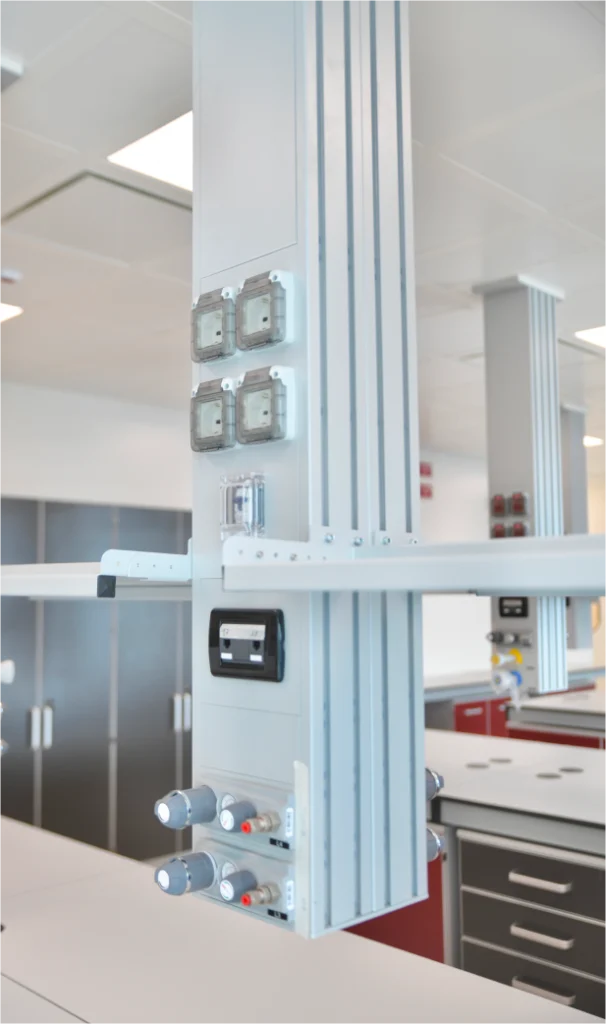
Adaptable MEP strategies solve this problem. Overhead service carriers, modular utility spines, plug‑and‑play electrical and data, reconfigurable gas and vacuum distribution, mobile service modules, and ceiling‑based systems that avoid trenching or wall demolition all enable utilities to shift as science shifts. These systems support rapid equipment turnover, robotics integration, multi‑disciplinary research, GMP and QC workflow changes, academic program evolution, and tenant turnover in developer‑led labs, all while reducing downtime and lowering lifecycle carbon.
Sustainability: Adaptability Is the Most Sustainable Strategy
When we talk about future‑proofing laboratories and protecting capital investment, sustainability must be part of the conversation. In the lab world, sustainability is often reduced to energy efficiency, but the truth is that the largest environmental impacts come from something far more fundamental: demolition, construction waste, frequent renovations, short‑lived infrastructure, and the high embodied carbon locked into casework and MEP systems.
Adaptability directly reduces all of these pressures. A laboratory that can be reconfigured without demolition is inherently lower‑carbon, lower‑waste, lower‑cost, and longer‑lasting. It supports the full lifecycle of the building rather than forcing repeated cycles of tear‑out and rebuild.
This approach aligns with global sustainability frameworks and the priorities of organizations such as My Green Lab, I2SL, SLCan, and institutional ESG mandates. In other words, adaptability isn’t just a design strategy, it’s a sustainability strategy.
Safety: The Non-Negotiable layer
Sustainability and capital stewardship are only part of the equation. The other non‑negotiable layer is safety. As scientific workflows evolve, safety requirements evolve with them, and a laboratory that cannot adapt eventually compromises both performance and protection.
An adaptable laboratory maintains proper equipment spacing, preserves clear egress paths, supports ergonomic adjustments, and allows robotics to be integrated safely and intentionally. It ensures utilities can be routed correctly as needs change and that airflow and containment performance remain stable even as the space is reconfigured.
A lab that cannot adapt becomes a safety risk and a liability.
Capital Stewardship: Designing Labs That Don’t Need to Be Rebuilt
Capital stewardship is the thread that ties all of this together. Across every sector – education, research, pharma, biotech, QC, GMP, and government, the objective is the same: invest once and adapt continuously. The most responsible laboratories are those that evolve without requiring demolition, major renovations, or repeated capital outlay.
In an adaptable laboratory, renovations become simple reconfigurations. Change orders become minor adjustments. Downtime shrinks. Capital expenditure behaves like a long‑term asset rather than a recurring cost. Sustainability goals are met without additional investment, and safety remains stable even as workflows shift. This is the future of responsible laboratory design.
Why This Matters Now
AI and robotics are accelerating scientific change. Wet lab and dry lab needs are shifting. Fume hood demand is rising. Sustainability and safety expectations are intensifying. Budgets are tightening. In this environment, adaptability isn’t a feature, it’s a philosophy. And it’s the only way to build laboratories that remain relevant as science accelerates.
Adaptability is not a feature. It is a financial strategy. And it is the only way to future‑proof your lab and protect capital investment.