

In today’s rapidly evolving research landscape, laboratories are dynamic, responsive ecosystems. With the rise of AI, robotics, and interdisciplinary collaboration, the physical infrastructure of labs must be as innovative as the science they support. That’s where the distinction between flexibility and adaptability in laboratory furniture becomes critical – and where thoughtful design of lab furnishings can make or break long-term success.
Flexibility: Reconfiguring for Immediate Needs
Flexibility refers to the ability to reconfigure furniture within a fixed space. Mobile benches, modular shelving, and plug-and-play utilities allow teams to adjust layouts based on shifting workflows, personnel changes, or short-term project demands.
Attributes of flexible lab furniture:
- Mobile workstations with lockable casters – or better yet, levelling feet!
- Adjustable-height benches and shelving
- Quick-connect utilities for gas, water, and data
- Freestanding components that don’t require permanent installation
Why it matters: As AI and robotics become more integrated into lab operations, the need to accommodate new equipment and workflows on the fly is growing. Flexibility enables labs to pivot quickly without costly renovations.
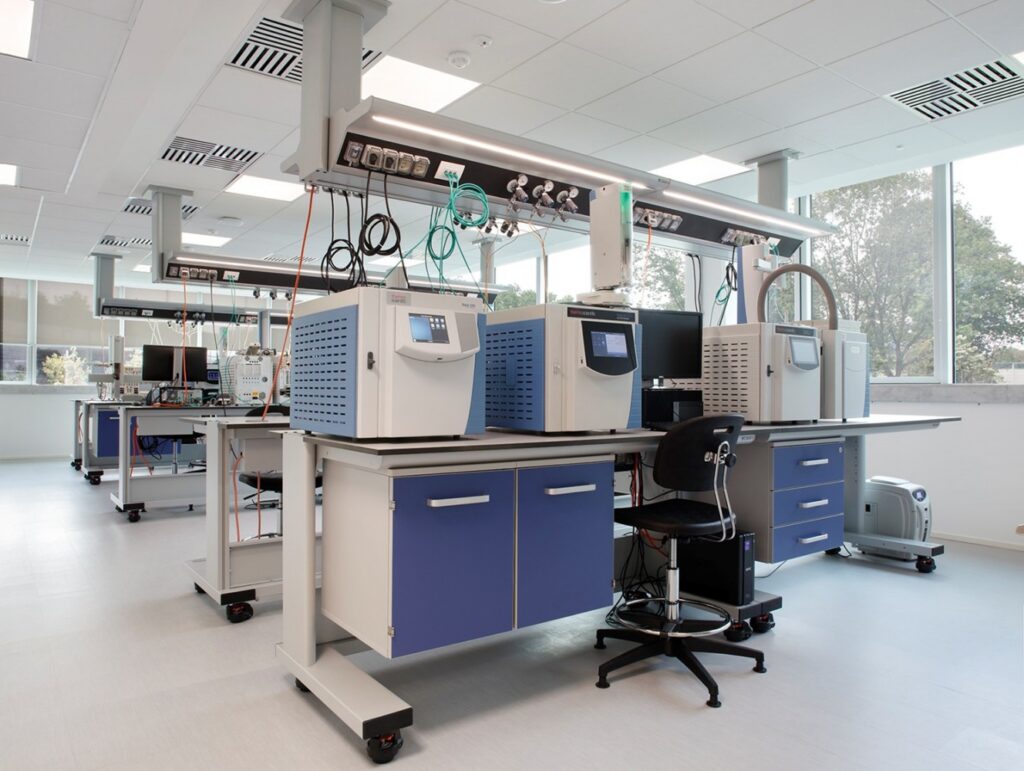
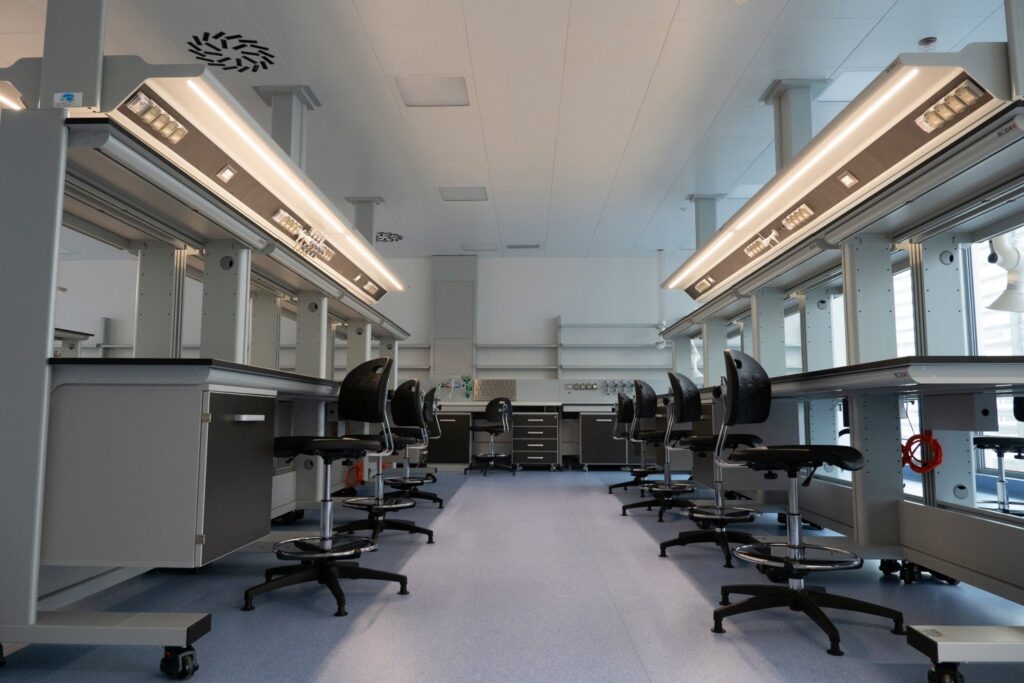
Height adjustable mobile benches with overhead services to enable greater flexibility
Adaptability: Planning for What’s Next
Adaptability goes deeper. It’s about designing furniture and infrastructure that can evolve with the lab’s long-term trajectory from changing research priorities to technological upgrades and even relocation.
Attributes of adaptable lab furniture:
- Modular systems that integrate with building infrastructure
- Scalable components that support future expansion
- Materials that meet evolving compliance standards
- Furniture designed to accommodate emerging technologies
Why it matters: Adaptable design ensures that today’s investment won’t become tomorrow’s limitation. As research becomes more data-driven and automated, labs must be ready to evolve without starting from scratch.
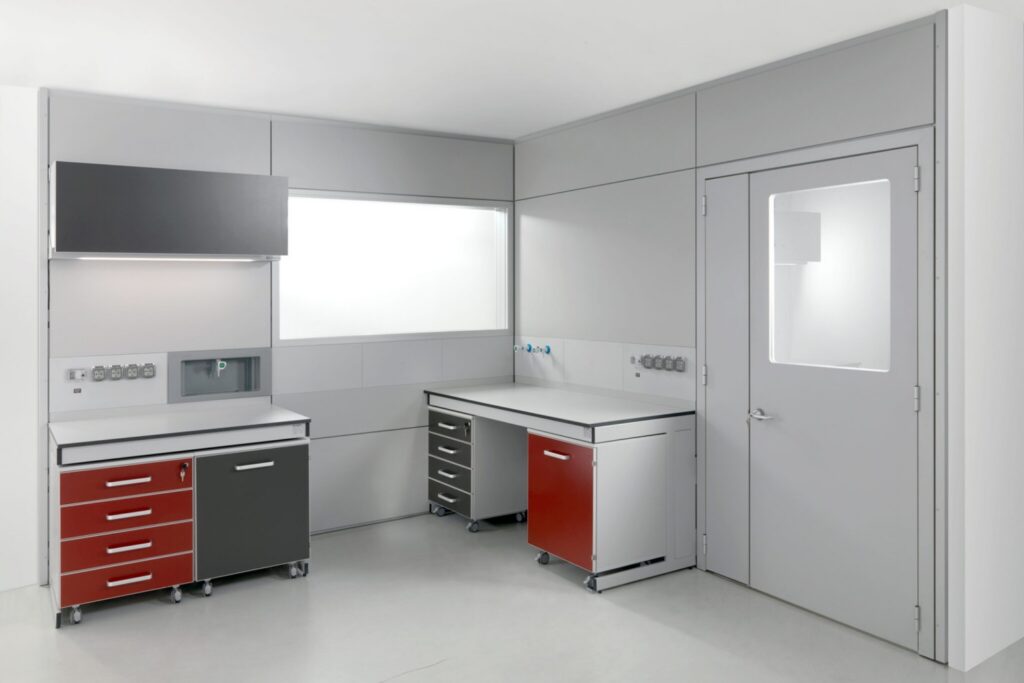
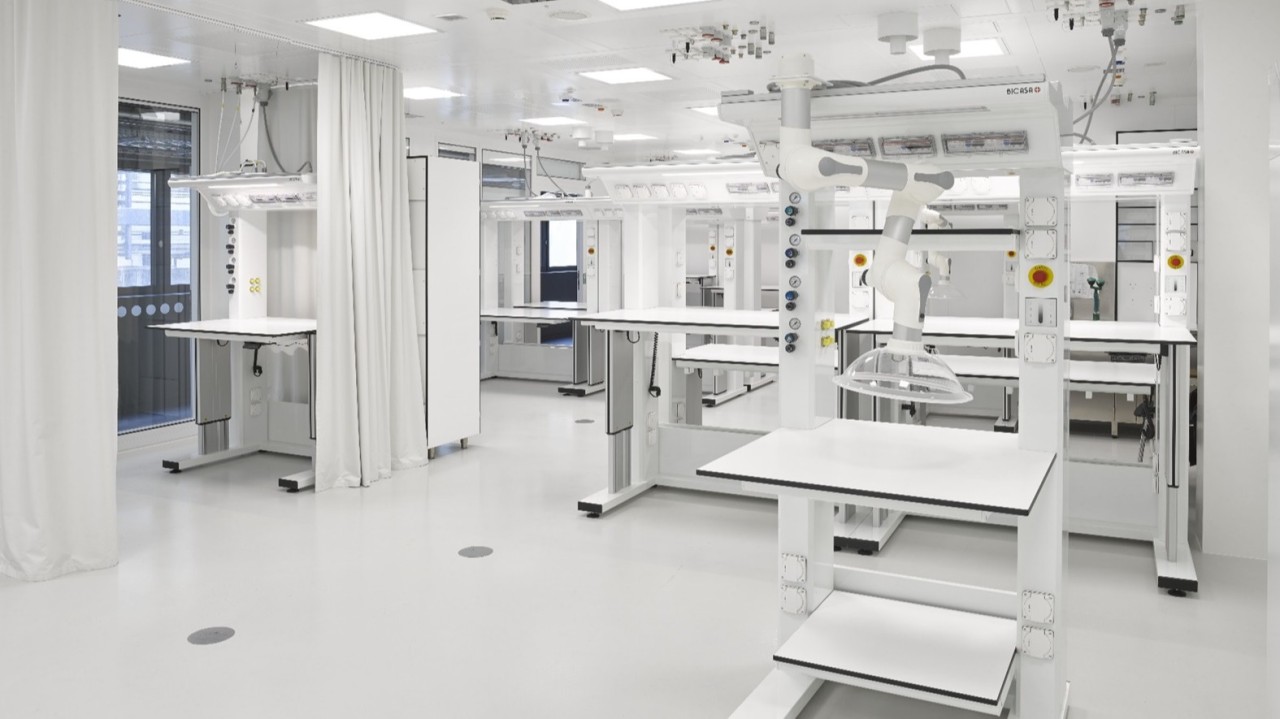
Adaptable and modular technical walls enable complete adaptability of the space
Don’t Overlook Durability and Style
While functionality is paramount, durability and style are far from superficial. High-quality materials reduce long-term maintenance costs and support sustainability goals. And design-forward aesthetics – clean lines, intuitive layouts, and cohesive finishes enhance user experience, reinforce brand identity, and help attract top talent.
Durability supports:
- Long-term ROI
- Compliance with safety and hygiene standards
- Reduced environmental impact
Style supports:
- Professional presentation for visiting collaborators and funders
- Employee satisfaction and retention
- Seamless integration with architectural design
Designing for Innovation
As the boundaries of science continue to expand, so must the environments that support it. Whether outfitting a new facility or retrofitting an existing one, investing in lab furniture that balances flexibility and adaptability with durability and style is a strategic move. It’s not just about what your lab needs today. It’s about what it can become tomorrow…
Spotlight on BICASA North America
BICASA North America exemplifies the fusion of flexibility, adaptability, durability, and style. With roots dating back to 1947, BICASA has built a reputation for:
- Hi-tech materials and cutting-edge R&D solutions
- Modular systems including fume hoods, mobile workstations, and both horizontal & vertical service modules
- Custom design integration that aligns with building infrastructure and scientific workflows
- Italian craftsmanship that blends precision engineering with timeless aesthetics
- Global reach and local responsiveness, offering tailored solutions for North American labs
BICASA isn’t just a supplier—it’s a strategic partner in creating future-ready lab environments.