

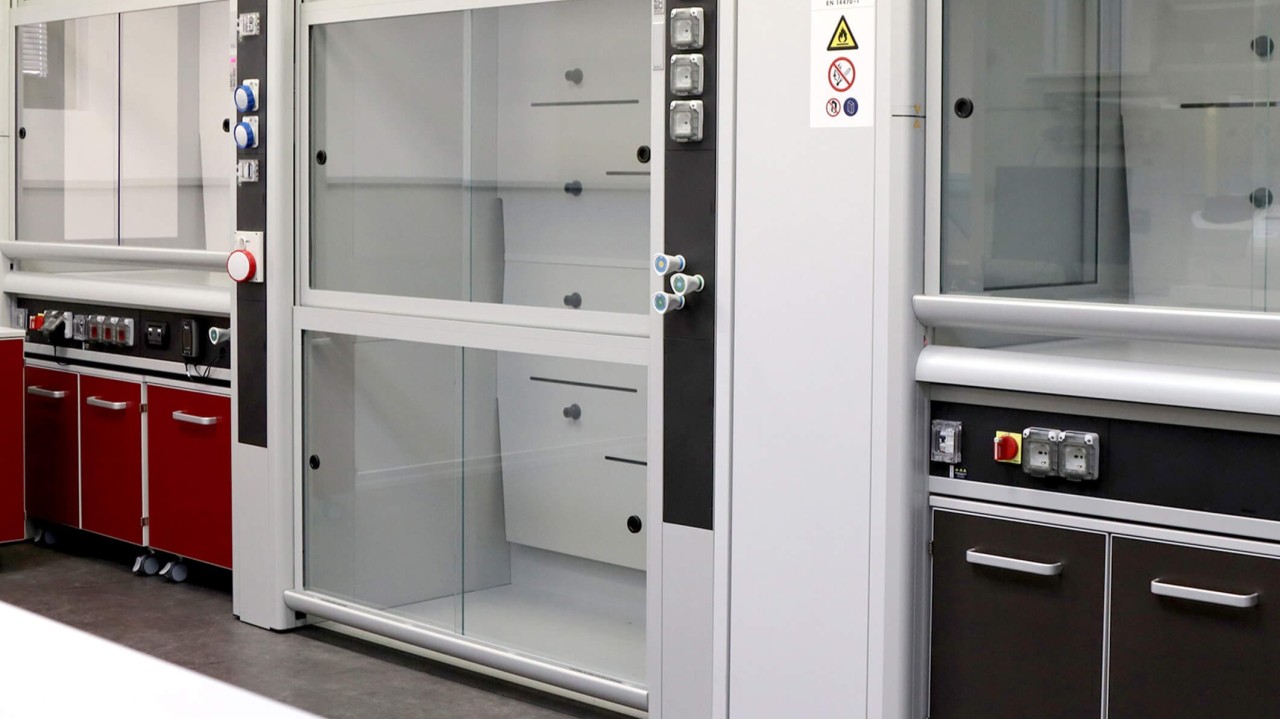
In our latest blog, we delve into the pivotal role of fume hoods in maintaining laboratory safety by containing and eliminating hazardous fumes, gases, and airborne contaminants. In this post, we explore the critical aspects of fume hood robustness, face velocity, and advanced designs from BICASA srl / BICASA North America that ensure safety, ease of use, and sustainability…
Robustness vs. Face Velocity: Understanding the Difference
Robustness in a fume hood is all about its ability to maintain effective containment under various conditions, ensuring a safe working environment irrespective of airflow changes or physical disruptions. On the other hand, face velocity refers to the speed of air entering the fume hood, typically measured in feet per minute (fpm). While face velocity is a common metric used to gauge performance, it doesn’t guarantee safety alone. Robustness ensures proper containment, while face velocity measures airflow speed.
The Myth of High Face Velocity
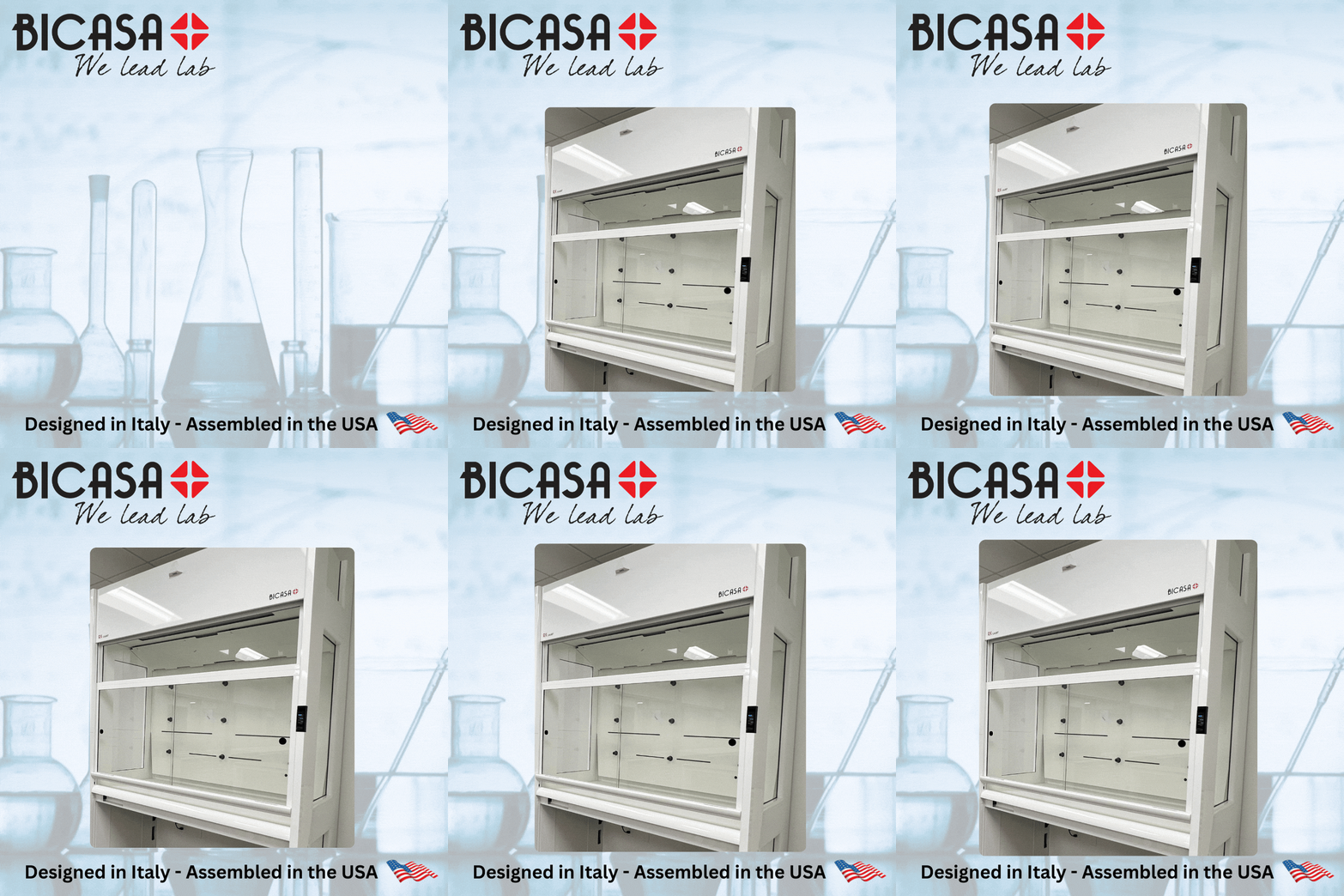
There’s a prevalent misconception that higher face velocity automatically translates to a safer fume hood. However, excessively high face velocities can create turbulence inside the fume hood, potentially causing hazardous fumes to escape. Therefore, maintaining an optimal face velocity range, typically between 80 to 120 fpm, ensures effective containment without creating turbulence. Notably, some modern robust fume hoods, such as the RX Smart from BICASA North America are designed to operate safely at significantly lower face velocities, between 30 to 40 fpm, thanks to advanced design and technology.
Variable Air Volume (VAV) vs. Constant Air Volume (CAV)
Variable Air Volume (VAV) and Constant Air Volume (CAV) are two different fume hood ventilation strategies:
- CAV systems maintain a constant airflow rate regardless of the sash position, leading to potential energy inefficiency as air is continuously exhausted at a high rate.
- VAV systems adjust the airflow based on the sash position and the laboratory’s needs. This adaptability allows for energy savings and better containment performance as the face velocity is maintained within the optimal range.
BICASA North America’s State-of-the-Art Fume Hood Design
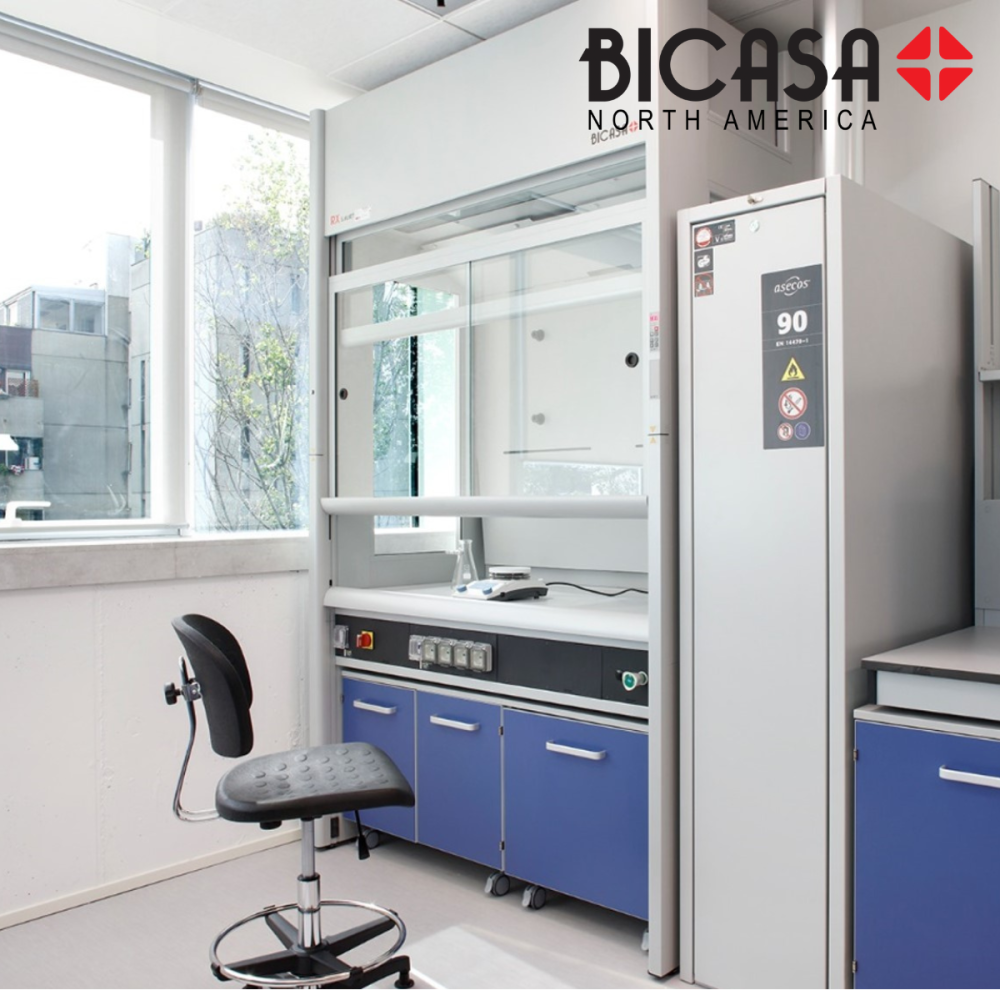
BICASA North America is at the forefront of fume hood innovation, prioritizing safety, usability, and sustainability with their state-of-the-art designs:
- User Interface Control Panel: BICASA fume hoods feature an intuitive control panel, making it easy for users to monitor and adjust settings for optimal performance.
- Sustainable Materials: Constructed using eco-friendly materials, these fume hoods minimize environmental impact and promote sustainability.
Test Requirements: SEFA 1, UL, ASHRAE, EN Standards
BICASA fume hoods meet stringent industry standards, ensuring the highest level of safety and performance:
- SEFA 1: Scientific Equipment and Furniture Association’s recommended practices for laboratory fume hoods, emphasizing containment and robustness.
- UL: Underwriters Laboratories standards focus on the electrical and fire safety aspects of fume hoods.
- ASHRAE 110: Specifies testing methods to evaluate fume hood containment performance, ensuring adherence to required safety levels.
- EN 14175: European Standards for performance testing of fume hoods, covering containment, robustness, and overall safety.
Conclusion
In conclusion, the robustness of a fume hood is paramount to ensuring laboratory safety through effective containment of hazardous substances. While face velocity is an essential metric, maintaining it within an optimal range is crucial for safe operation. Advanced fume hood designs, such as those from BICASA North America, incorporate innovative features that enhance safety, usability, and sustainability. By adhering to stringent industry standards, these fume hoods provide a reliable and safe working environment for laboratory professionals worldwide.